

Sommaire:
1. Contexte
2. Le virus
2.1 Son origine
2.2 Quels en sont les dangers?
3. Quelle approche
3.1 La Rémunération ne fonctionne pas
3.2 La Reconnaissance
1. Contexte
“Go the extra mile, it’s never crowded”, nous indique un idiome américain. Ce dernier veut dire que très peu de personnes sont prêtes à faire le travail en plus – le petit plus qui vient poser la petite cerise sur le gâteau.
Récemment, ceci est davantage vrai, avec l’accroissement de la démission silencieuse, un mouvement qui incite les salariés à faire le ‘minimum syndical’, et à simplement faire ce qu’il leur est demandé.
Le quiet quitting se définit comme une application du travail à la règle, dans laquelle les employés travaillent pendant des heures définies et s'engagent uniquement dans des activités pendant ces heures.

Certains y voient un problème, d’autre pas du tout.
Voici les deux points de vues:
- Les managers voient une baisse de motivation et donc de résultats de la part de leurs Talents. Ils ne s’attendent pas à ce que soit fait seulement ce qu’est demandé, mais plus.
- Les Talents, qui se demandent:
A. “Doit-on véritablement faire plus que ce qui nous est demandé pour dire que nous avons bien fait le travail”?
B. “Je fais le maximum – je fais ce que vous me demandez”
De ces points de vue, émerge une problématique – qui a raison?
La réponse dépend de vos exigences, des valeurs de votre entreprise, et de vos méthodes de travail – dans certains cas (1) aura raison et dans d’autres, ce sera l’avis (2)
2. Le virus
2.1 Son origine
Comprendre l’origine de ce mouvement est important pour pouvoir y remédier.
L'épuisement professionnel est un risque important sur le lieu de travail, en particulier chez les jeunes professionnels de la génération Z âgés d'une vingtaine d'années, selon des recherches.
Une enquête menée par Microsoft auprès de 30 000 travailleurs a montré que 54 % des travailleurs de la génération Z envisagent de quitter leur emploi.
Dans son Rapport sur les risques mondiaux 2021, le Forum économique mondial classe la « désillusion des jeunes » comme le huitième des 10 risques immédiats. Les résultats incluent une détérioration de la santé mentale depuis le début de la pandémie, laissant 80 % des jeunes dans le monde vulnérables à la dépression, à l'anxiété et à la déception.
Encore plus flagrant, une étude récente montre que l’engagement des travailleurs européens n’est que de 14% !

2.2 Ses Dangers:
Les dangers sont nombreux et comptent la pénurie de Talents, le TurnOver élevé au sein d’une entreprise, et donc une baisse de performance et de résultats.
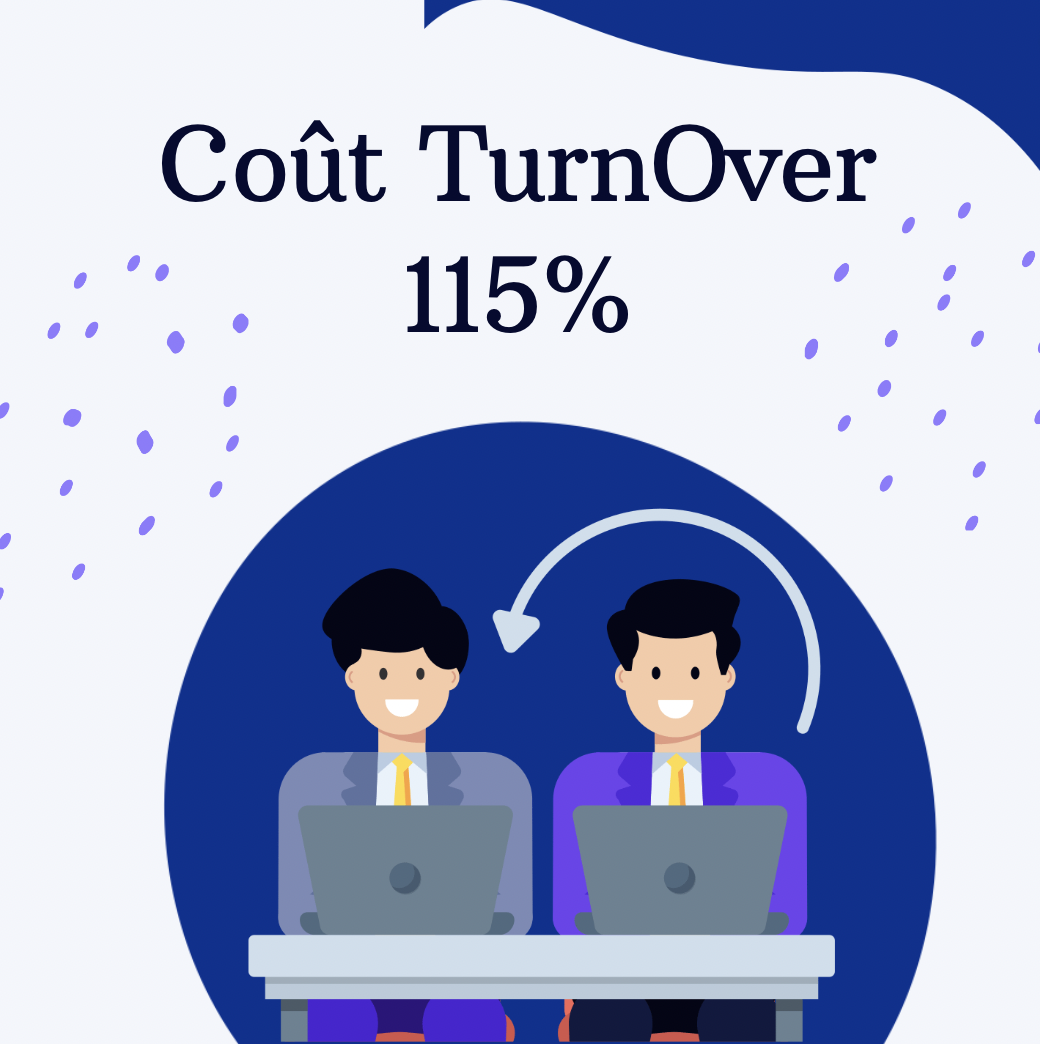
Ceci est particulièrement flagrant lorsque nous voulons que le coût du TurnOver de vos collaborateurs reprenne en moyenne 115% de leur salaire annuel, et est aujourd'hui estimé à 23% des collaborateurs totaux, étude de Hay Group.
Encore plus grave, un article de 'la super agence' va même jusqu'à dire que “Au niveau international, la fameuse guerre des talents a atteint un niveau sans précédent : 40% des recruteurs déclarent avoir des difficultés pour recruter.
3. lutter contre ce virus, quelle approche
3.1 La rémunération ne fonctionne pas
Dans de nombreuses entreprises, l'argent est le facteur de motivation le plus fréquemment utilisé, alors que beaucoup de recherches montrent que les incitations financières sont un mauvais choix pour changer le comportement d’une Talent. L’étude (HBR) révèle que les récompenses ou incitations monétaires ne produisent qu'une conformité temporaire à court terme. Bien sûr, l'argent est important pour que les gens puissent payer leurs factures et subvenir aux besoins de leur famille - mais une fois ces besoins fondamentaux satisfaits, les avantages psychologiques de l'argent sont discutables. Il existe peu de corrélation entre les niveaux de rémunération et de satisfaction au travail.
3.2 La Reconnaissance
Premièrement pour comprendre leur souffrance mais aussi pour faire grandir en eux le sentiment d’importance. Même si le problème ne peut pas se régler immédiatement, les salariés vont se sentir écoutés et seront reconnaissants de cette écoute.
La vie professionnelle des gens s'enrichit considérablement lorsqu'ils sentent qu'ils progressent dans un travail qui a du sens. Lorsque les organisations donnent du sens aux gens, cela contribue à bâtir une organisation saine et efficace. De nombreuses études ont démontré qu'en donnant aux gens un sens et une appropriation de leur travail, ils sont plus engagés à le faire.
Si vous souhaitez améliorer l'engagement des employés, la réponse consiste à consacrer vraiment du temps à comprendre ce que les employés apprécient vraiment et à reconnaître votre équipe en tant que membres contributeurs d'une équipe gagnante. Les gens sont poussés à travailler plus dur lorsqu'ils peuvent s'aligner sur la mission de l'entreprise et lorsque leur responsable montre de l'appréciation pour leur travail. En tant que manager, établissez un lien personnel et une relation de confiance avec vos employés.
Autrement dit “Miser sur le care pour éviter le quit”
Mettez ce dictons en place, et vous verrez - le virus disparaîtra très rapidement.